Introduction
When it comes to premium baby blankets, safety is not a feature—it is a baseline requirement. Parents today are more informed and more discerning than ever before. They read labels. They research materials. And they are increasingly unwilling to compromise on what touches their baby's skin.
This is where OEKO-TEX certification enters the picture. For manufacturers and brands sourcing crystal super soft fabric for baby blankets, OEKO-TEX Standard 100 certification is not merely a marketing advantage—it is increasingly becoming a market prerequisite. The combination of crystal super soft fabric's exceptional hand feel and OEKO-TEX's rigorous safety standards creates a product proposition that resonates with both safety-conscious parents and premium retailers.
This article explores why OEKO-TEX certified crystal super soft fabric is essential for premium baby blankets, examining the certification requirements, the fabric's properties, market trends, and practical sourcing considerations.
What Is OEKO-TEX Standard 100?
OEKO-TEX Standard 100 is a globally unified, independent testing and certification system for textile raw materials, semi-finished products, finished goods, and all accessories at every processing stage. Launched in 1992, it is one of the world's best-known labels for textiles tested for harmful substances.
The certification goes far beyond national legal requirements. It tests for over 1,000 harmful substances, including:
Azo dyes, carcinogenic and allergenic dyes
PFAS, Bisphenol A, and formaldehyde
Pesticides, chlorinated phenols, chlorobenzenes and toluenes
Heavy metals, phthalates, and organotin compounds
Products are only awarded the STANDARD 100 label if every component—from the fabric and sewing thread to buttons, zippers, and labels—meets the required criteria. The criteria are updated annually to reflect the latest scientific findings and regulatory changes.
The Four Product Classes
OEKO-TEX Standard 100 classifies textile products into four categories based on their intended use and skin contact:
Product Class | Definition | Examples |
Class I | Products for babies and toddlers up to 36 months | Clothing, sleepwear, bedding, textile toys, stroller padding |
Class II | Products with direct skin contact | Underwear, T-shirts, bed linens, towels |
Class III | Products with no or minimal skin contact | Fillings, linings, jackets, outerwear |
Class IV | Decorative furnishings | Tablecloths, curtains, upholstery fabrics |
For baby blankets, Product Class I applies. This is the strictest level of the certification, with the most rigorous limits on all harmful substances. Because infants' immune systems are not fully developed and their skin is highly sensitive, the limits for Class I are set at the highest safety level.
OEKO-TEX Class I: The Gold Standard for Infant Safety
OEKO-TEX Class I is widely regarded as the gold standard for infant textile safety. The requirements of STANDARD 100 go beyond existing national legislation, providing an independent assurance that products are safe for even the most sensitive skin.
Crucially, OEKO-TEX STANDARD 100 has prohibited the use of biocides (biologically active products) in baby articles since 2025. This reflects the standard's commitment to staying ahead of emerging safety concerns.
For a baby blanket to carry the OEKO-TEX Class I label, the entire product—fabric, sewing thread, labels, trim, and any other components—must pass the stringent testing. This all-inclusive approach is what gives the certification its credibility and what makes it so valuable to both brands and consumers.
What Is Crystal Super Soft Fabric?
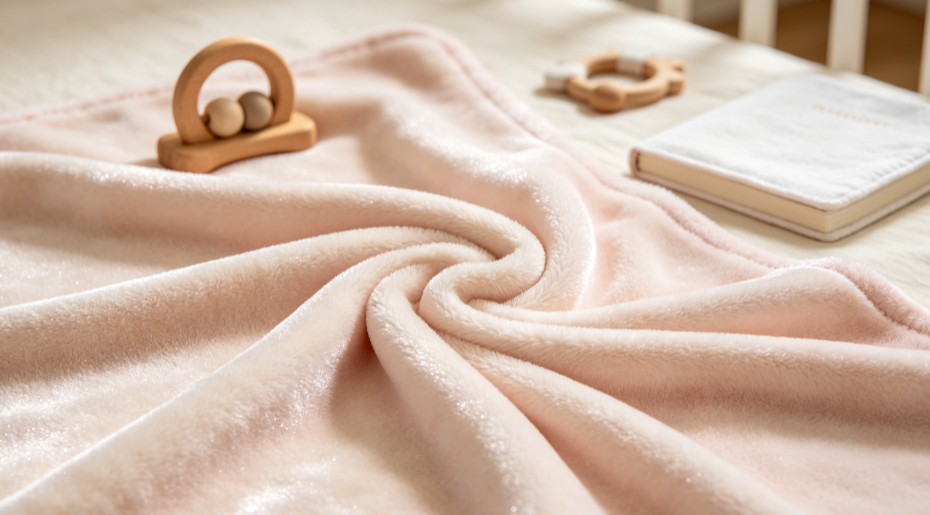
Crystal super soft fabric is a knitted plush textile made from 100% polyester microfiber. It is characterized by its exceptional softness, fine texture, and lustrous appearance.
Key Physical Properties
The fabric's defining characteristics include:
Exceptional softness. Crystal super soft fabric has a finer, more delicate surface than standard plush fabrics. The fibers are densely packed, creating a plush, three-dimensional pile that feels remarkably smooth and thick to the touch.
Warmth and insulation. The dense fiber structure contains numerous fine fibers that form a natural thermal barrier, preventing cold air from penetrating and reducing heat loss. This makes it ideal for baby blankets that need to keep infants warm without being overly heavy.
Durability. The fabric is resistant to pilling and shedding. High-quality crystal super soft undergoes heat-shrink treatment, which helps prevent deformation and wrinkling.
Easy care. Crystal super soft is machine washable, non-wrinkling, non-fading, and resistant to pilling.
Versatility. The fabric is widely used for children's保暖 clothing, baby cotton-padded clothes, gloves, plush slippers, cushions, blankets, sofa cushions, and toys.
Why Crystal Super Soft for Baby Blankets?
Crystal super soft fabric is particularly well-suited to baby blankets because of its combination of softness and durability. A baby's skin is delicate and easily irritated by rough or abrasive fabrics. The ultra-soft texture of crystal super soft minimizes friction and provides a gentle, comfortable surface for infants. Its warmth-to-weight ratio means babies stay cozy without being weighed down by heavy blankets.
The fabric is also highly aesthetic. Its lustrous appearance and fine texture make it attractive for premium baby products, while its availability in a wide range of colors and patterns provides design flexibility.
Why OEKO-TEX Certification Is Non-Negotiable for Premium Baby Blankets
Safety: Protecting the Most Vulnerable Consumers
This is the most fundamental reason. Babies explore the world with their mouths. Blankets are chewed, sucked, and held close to the skin for hours at a time. Any harmful substance in the fabric can be ingested or absorbed through the skin.
OEKO-TEX Class I certification provides independent, third-party verification that a baby blanket is free from over 1,000 harmful substances. This includes chemicals that are not currently regulated by law but are known to be harmful to human health. As one source notes, certification "reduces babies' exposure to harmful chemicals like formaldehyde, heavy metals, and certain dyes, which can cause skin irritation and health concerns".
In a market where parents are increasingly skeptical of unsubstantiated safety claims, the OEKO-TEX label provides concrete, verifiable proof of safety.
Regulatory Compliance: The Market Access Imperative
OEKO-TEX Standard 100 is aligned with major global regulations, including the EU REACH regulation and the U.S. CPSIA (Consumer Product Safety Improvement Act). Because the standard's limits are often stricter than legal requirements, certification provides a "one-stop" compliance solution for multiple markets.
For brands exporting to the EU and North America, OEKO-TEX certification has become a de facto requirement. As the market report notes, "Certifications like OEKO-TEX Standard 100 are not just preferred but often mandatory for market access".
Consumer Trust and Premium Positioning
The OEKO-TEX label is one of the most recognized and trusted textile certifications globally. For parents, it serves as a simplified decision-making tool—a reliable indicator that a product has been independently tested and found safe.
This trust translates directly into commercial value. Certified reusable baby blankets command a retail price premium of 15–30% over conventional alternatives. In urban markets, sustainability certifications like OEKO-TEX have become key purchase criteria, with certified products achieving a 15–20% price premium at retail.
For premium brands, OEKO-TEX certification is not just about avoiding negative consequences—it is about capturing value. It differentiates products in a crowded market, justifies premium pricing, and builds lasting brand loyalty.
Supply Chain Transparency and Risk Management
OEKO-TEX certification requires all components of a product to be tested and certified. This forces brands to know their supply chain and ensures that every material—from the primary fabric to the smallest accessory—meets safety standards.
This comprehensive approach reduces the risk of regulatory violations, product recalls, and reputational damage. It also aligns with the growing demand for supply chain transparency from both regulators and consumers.
Staying Ahead of Regulatory Changes
OEKO-TEX standards are updated annually to incorporate the latest scientific findings and regulatory changes. For example, as of 2025, OEKO-TEX has explicitly banned biocides in baby products. By maintaining certification, brands benefit from an early warning system that helps them stay ahead of regulatory requirements.
Market Trends: Certification-Led Premiumization
The market data confirms that OEKO-TEX certification is not a niche requirement—it is a mainstream expectation.
The global baby bedding market was valued at $6.8 billion in 2024** and is projected to reach **$11.2 billion by 2032, registering a growth rate of 6.4%. Within this growing market, certified products are the fastest-growing segment.
Key trends include:
Premiumization through certification. Reusable baby blankets bearing OEKO-TEX Standard 100 or GOTS certifications command a 15–30% retail price premium and are expanding at an estimated 8–10% CAGR.
Certification as a purchase criterion. In urban markets, sustainability certifications have become key purchase criteria for parents.
Shift toward premium, safe, and eco-friendly products. The market is experiencing a shift toward premium, safe, and eco-friendly products, driving manufacturers to innovate and enhance value-added product sales.
Multi-functionality. The market also observes increasing demand for multi-functional baby blankets serving purposes beyond just warmth, such as swaddling, nursing covers, or playmats.
Sourcing Considerations: What to Look For
For brands and manufacturers sourcing crystal super soft fabric for baby blankets, the following considerations are critical:
Verify the Certification
Not all claims are equal. Insist on seeing the OEKO-TEX certificate and verify it through the OEKO-TEX Label Check database. Confirm that the certification covers:
Product Class I (baby articles)
All components of the finished product, including accessories
The specific annex and testing criteria applied (Annex 4 is standard; Annex 6 is more stringent)
Confirm the Fabric Specifications
Crystal super soft fabric can vary significantly in quality. For premium baby blankets, specify:
Fiber composition: Typically 100% polyester microfiber
Fabric weight (GSM): Appropriate for the intended use
Finishing: Ensure finishes are OEKO-TEX compliant and free from biocides
Durability requirements: Anti-pilling, anti-shedding, machine washableUnderstand the Supply Chain
OEKO-TEX certification requires all components to be certified. Work with suppliers who can demonstrate:
Traceability of materials
Certification of all components (fabric, thread, labels, trims)
Compliance with the latest OEKO-TEX standards
Plan for the Certification Process
OEKO-TEX STANDARD 100 certification is valid for 12 months. Plan for annual renewal and allow sufficient time for the process—particularly for products with multiple material suppliers.
FAQ
Q: What is the difference between OEKO-TEX Class I and other classes?
A: Class I is the strictest level, specifically for products for babies and toddlers up to 36 months. It has the most rigorous limits on all harmful substances because infants' skin is highly sensitive and their immune systems are not fully developed.
Q: Does OEKO-TEX certification cover all components of a baby blanket?
A: Yes. The STANDARD 100 label is only awarded if all constituent parts—fabric, thread, buttons, zippers, labels, and any other accessories—meet the required criteria.
Q: Is crystal super soft fabric safe for babies?
A: Crystal super soft fabric is safe for babies when it is OEKO-TEX certified. Certification ensures the fabric is free from over 1,000 harmful substances and meets the stringent requirements of Product Class I.
Q: What is the price premium for OEKO-TEX certified baby blankets?
A: Certified baby blankets command a retail price premium of 15–30% over conventional alternatives. In some markets, the premium is 15–20%.
Q: How often are OEKO-TEX standards updated?
A: OEKO-TEX standards are updated annually to incorporate the latest scientific findings and regulatory changes. The updates are typically announced in advance and take effect on a specific date each year.
Q: What are the latest changes to OEKO-TEX standards for baby products?
A: As of 2025, OEKO-TEX has banned the use of biocides (biologically active products) in baby articles and products that come into direct contact with mucous membranes.
Q: Can I use non-certified fabric if the finished product is certified?
A: No. The entire finished product—including all its components—must meet the OEKO-TEX criteria. Using non-certified fabric would prevent the finished product from achieving certification.
Final Thoughts
OEKO-TEX certified crystal super soft fabric is not a luxury for premium baby blankets—it is a necessity. The combination of the fabric's exceptional softness and warmth with the rigorous safety assurance of OEKO-TEX Class I creates a product that meets the highest standards of both comfort and safety.
For brands, the business case is compelling. Certified products command premium prices, build consumer trust, reduce regulatory risk, and align with the growing demand for transparency and sustainability. For parents, the OEKO-TEX label provides the confidence that the blanket their baby sleeps with is free from harmful substances.
In an increasingly competitive and safety-conscious market, OEKO-TEX certification is not just a differentiator—it is becoming the price of entry. As one industry observer put it, "OEKO-TEX Class I is the gold standard for infant safety". For premium baby blankets, anything less is a compromise.
Need Custom Fabric Solutions?
We can customize colors, textures, and specifications to meet your exact requirements.
Contact Us