
Introduction
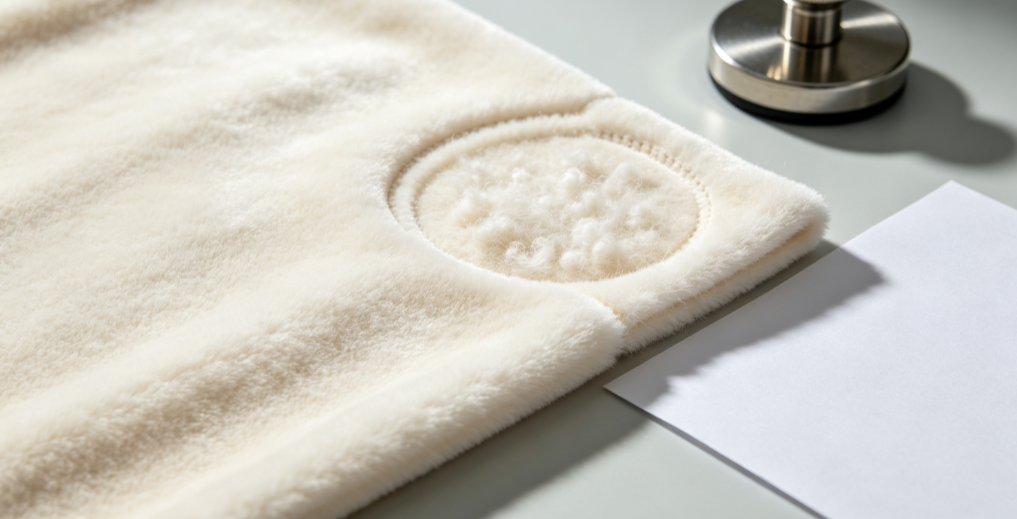
Crystal super soft fabric is a knitted plush textile made from 100% polyester microfiber. It is prized for its exceptional softness, fine texture, and lustrous appearance—qualities that make it a popular choice for baby blankets, plush toys, apparel, and home textiles.
But here‘s the challenge: the same fine fibers that give crystal super soft its luxurious hand feel also make it susceptible to pilling and shedding. When short fibers work their way to the surface and tangle into small balls (pilling), or when loose fibers detach from the fabric surface (shedding), the product’s appearance and perceived quality suffer. For manufacturers sourcing this fabric in bulk, understanding how to test for these defects is not optional—it is essential for quality control, customer satisfaction, and brand reputation.
This guide covers the standard test methods for evaluating pilling resistance and shedding in crystal super soft fabric, including the applicable standards, test procedures, grading systems, and what constitutes an acceptable result for premium applications.
Understanding the Defects: Pilling vs. Shedding
Before diving into test methods, it is important to distinguish between two related but different phenomena.
Pilling is the formation of small, tangled balls of fiber on the fabric surface. It occurs when fibers work loose from the fabric structure, migrate to the surface, and become entangled through friction during use or laundering. Pilling affects appearance, hand feel, and perceived quality. In severe cases, pills can create a rough, uncomfortable surface that irritates sensitive skin—a particular concern for baby products.
Shedding (also called fuzzing or linting) is the release of loose fibers from the fabric surface. Unlike pilling, which involves fibers remaining on the surface in tangled balls, shedding involves fibers completely detaching from the fabric. Shedding is particularly problematic for plush fabrics because loose fibers can transfer to other surfaces, be inhaled, or irritate skin.
Both defects are influenced by fiber type, fiber length, yarn structure, fabric construction, and finishing treatments. For crystal super soft fabric—which uses fine, short-staple polyester microfibers—both pilling and shedding are inherent risks that must be controlled through proper manufacturing and verified through rigorous testing.
Pilling Resistance Test Methods
Several standard test methods are available for evaluating pilling resistance. The choice of method depends on the fabric type, end use, and applicable product standards.
1. Circular Track Method (GB/T 4802.1)
The Circular Track Method, standardized as GB/T 4802.1-2008, is one of the most widely used pilling test methods in China. It is applicable to woven fabrics, knitted fabrics, and wool fabrics. This method simulates the friction and pilling conditions that fabrics experience during normal use.
Test principle: The specimen is rubbed against a nylon brush and an abrasive fabric (or against the abrasive fabric alone) under specified pressure and for a specified number of cycles. The rubbing action causes fibers to work loose and form pills on the fabric surface.
Test parameters:
Parameter | Typical Setting |
Specimen size | 112.8 mm diameter (100 cm² area) |
Abrasive material | Nylon brush and wool abrasive fabric |
Pressure | 490 cN (for knitted fabrics) |
Number of cycles | 125, 500, or 1000 cycles (depending on product standard) |
Test duration | Approximately 3–5 minutes per specimen |
Grading: After testing, the specimen is evaluated under standard lighting conditions by visual comparison against a set of photographic standards or a written rating scale. The grading scale for pilling resistance is:
Grade | Description |
5 | No change or very slight surface fuzzing; no pills |
4 | Slight surface fuzzing and/or partially formed pills |
3 | Moderate pilling; pills are clearly visible |
2 | Significant pilling; pills are dense and clearly visible |
1 | Severe pilling; surface is covered with pills |
Grades are reported in half-grade increments (e.g., 4-5, 3-4). A grade of 3–4 is usually regarded as satisfactory for most textile applications.
Applicability for crystal super soft: The circular track method is suitable for crystal super soft fabric because it simulates the abrasion that plush fabrics experience during use. The method is relatively fast and widely accepted in the Chinese textile industry.
2. Pilling Box Method (ISO 12945-1 / GB/T 4802.3)
The Pilling Box Method, standardized as ISO 12945-1 and GB/T 4802.3, is an international standard for evaluating pilling resistance.
Test principle: Specimens are sewn into tubular form and mounted on polyurethane tubes. Four specimens are placed in a cork-lined wooden box that rotates at a constant speed (typically 60 rpm). The specimens tumble freely inside the box, with no external pressure applied. The random tumbling action causes fibers to work loose and form pills through inter-fiber friction.
Test parameters:
Parameter | Typical Setting |
Specimen size | 125 mm × 125 mm (sewn into tube) |
Tube material | Polyurethane |
Box lining | Cork |
Rotation speed | 60 rpm |
Number of rotations | 7,200 (2 hours) or 14,400 (4 hours) |
Test duration | 2–4 hours |
Grading: Same 5-point scale as the circular track method (5 = best, 1 = worst).
Applicability for crystal super soft: The pilling box method is suitable for knitted and plush fabrics. It simulates the random abrasion that occurs during use and laundering. The longer test duration provides a more rigorous evaluation than the circular track method.
3. Martindale Method (ISO 12945-2 / GB/T 4802.2)
The Martindale Method, standardized as ISO 12945-2 and GB/T 4802.2, uses a Martindale abrasion tester to evaluate pilling resistance.
Test principle: The specimen is rubbed against a standard wool abrasive fabric under controlled pressure using a Lissajous (multi-directional) movement pattern. The multi-directional abrasion simulates the complex friction patterns that fabrics experience during actual use.
Test parameters:
Parameter | Typical Setting |
Specimen size | 140 mm diameter (area: 38 cm²) |
Abrasive material | Standard wool fabric |
Pressure | 9 kPa (for knitted fabrics) |
Number of cycles | 500–5,000 cycles |
Test duration | Varies (2–6 hours) |
Grading: Same 5-point scale.
Applicability for crystal super soft: The Martindale method provides a more controlled and repeatable test than the pilling box method. It is widely used in Europe and internationally.
4. Random Tumble Method (ASTM D3512 / GB/T 4802.4)
The Random Tumble Method, standardized as ASTM D3512 and GB/T 4802.4, uses a random tumble pilling tester.
Test principle: Specimens are placed in a rotating chamber lined with abrasive material. The specimens tumble randomly, encountering abrasion from the chamber lining and from other specimens.
Applicability for crystal super soft: This method is particularly suitable for plush and napped fabrics because the random tumbling action effectively simulates the abrasion that plush fabrics experience during use.
5. Brush Pilling Method (ASTM D3511)
The Brush Pilling Method, standardized as ASTM D3511, uses a brush pilling tester.
Test principle: The specimen is subjected to abrasive action from a rotating brush under controlled pressure. The brush action causes fibers to work loose and form pills.
Applicability for crystal super soft: This method is typically used for heavy-duty fabrics like upholstery, automotive textiles, and luggage. It is not commonly used for lightweight plush fabrics like crystal super soft.
Shedding Test Methods
Shedding testing evaluates the tendency of loose fibers to detach from the fabric surface. This is particularly important for plush fabrics used in baby products, where loose fibers could be ingested or cause skin irritation.
1. Weight Loss Method
The weight loss method is a quantitative approach that measures the mass of fibers lost from the fabric during a standardized abrasion or washing procedure.
Test principle: A specimen is weighed before and after a specified abrasion or washing cycle. The difference in weight represents the mass of fibers shed.
Procedure:
Condition the specimen in a standard atmosphere (temperature: 20±2°C, humidity: 65±4%)
Weigh the specimen to the nearest 0.001 g
Subject the specimen to a standardized abrasion or washing procedure
Dry and condition the specimen
Weigh the specimen again
Calculate the weight loss as a percentage of the original weight
Acceptance criteria: Acceptance criteria vary by application. For premium baby blankets, many manufacturers require shedding of less than 1% of the fabric weight.
2. Tape Test Method
The tape test is a qualitative method that evaluates shedding by measuring the amount of fiber transferred to an adhesive tape.
Test principle: A piece of standard adhesive tape is pressed onto the fabric surface under controlled pressure, then removed. The tape is evaluated visually or under magnification for the amount of fiber transferred.
Grading: The amount of fiber on the tape is compared against a photographic standard or rated on a scale.
Applicability for crystal super soft: The tape test is simple, fast, and particularly suitable for plush fabrics where shedding is a concern.
3. Visual Inspection Method
The visual inspection method is the simplest approach for evaluating shedding.
Test principle: The fabric surface is inspected visually under standard lighting conditions for the presence of loose fibers. The degree of shedding is rated against a photographic standard or a written description.
Limitations: This method is subjective and less repeatable than quantitative methods. However, it is widely used as a quick screening test.
Recommended Testing Protocol for Crystal Super Soft Fabric
For manufacturers sourcing crystal super soft fabric in bulk, the following testing protocol is recommended:
Pilling Resistance
Parameter | Recommended Test Method |
Primary method | GB/T 4802.1 (Circular Track Method) |
Alternative method (international) | ISO 12945-1 (Pilling Box Method) |
Specimen preparation | Condition per GB/T 6529 or ISO 139 |
Test parameters | 490 cN pressure, 125 cycles |
Grading | 5-point scale (5 = best, 1 = worst) |
Acceptance criteria | ≥ 4 (for premium baby blankets) or ≥ 3-4 (for general applications) |
Shedding
Parameter | Recommended Test Method |
Primary method | Weight loss method (quantitative) |
Alternative method | Tape test (qualitative) |
Specimen preparation | Condition per GB/T 6529 or ISO 139 |
Abrasion cycles | 500 cycles (or as specified) |
Acceptance criteria | < 1% weight loss (for premium baby blankets) |
Sampling Plan
For bulk orders, the following sampling plan is recommended:
Order Quantity | Sample Size |
< 1,000 units | 5 specimens |
1,000 – 10,000 units | 10 specimens |
> 10,000 units | 20 specimens (or as agreed) |
Specimens should be taken from different production batches and different locations within the fabric roll to ensure representative sampling.
Acceptance Criteria for Premium Applications
For crystal super soft fabric used in premium baby blankets, the following acceptance criteria are typical:
Parameter | Acceptance Criteria |
Pilling resistance (GB/T 4802.1) | ≥ Grade 4 |
Pilling resistance (ISO 12945-1) | ≥ Grade 3-4 |
Shedding (weight loss) | < 1.0% |
Shedding (tape test) | No visible fiber transfer |
Products that meet these criteria are considered suitable for premium baby applications. For general applications (toys, home textiles, apparel), Grade 3-4 may be acceptable.
Common Failures and Root Causes
Understanding why crystal super soft fabric fails pilling or shedding tests helps manufacturers address quality issues at the source.
Failure Mode | Possible Root Cause |
Excessive pilling | Short fiber length, low twist yarn, insufficient heat-setting |
Uneven pilling | Inconsistent fiber quality, uneven dyeing or finishing |
High shedding | Poor fiber anchoring, insufficient brushing, excessive fiber loss during finishing |
Pilling after washing | Inadequate anti-pilling finish, poor washing conditions |
Preventive measures:
Use longer-staple polyester fibers (≥ 38 mm) for improved fiber anchoring
Apply anti-pilling finishes during finishing
Ensure proper heat-setting to stabilize the fabric structure
Control brushing intensity to avoid excessive fiber damage
Optimize dyeing and finishing conditions to minimize fiber degradation
FAQ
Q: What is the most suitable pilling test method for crystal super soft fabric?
A: The Circular Track Method (GB/T 4802.1) is the most widely used test method for crystal super soft fabric in China. For international applications, the Pilling Box Method (ISO 12945-1) is recommended. Both methods are suitable for knitted plush fabrics.
Q: What pilling grade is acceptable for premium baby blankets?
A: For premium baby blankets, a pilling grade of Grade 4 or higher is typically required. For general applications, Grade 3-4 is considered satisfactory.
Q: How do I test shedding in crystal super soft fabric?
A: Shedding can be tested using the weight loss method (quantitative) or the tape test (qualitative). The weight loss method is more objective and repeatable.
Q: What causes pilling in crystal super soft fabric?
A: Pilling is caused by short fibers working loose from the fabric structure and tangling on the surface. Factors that contribute to pilling include short fiber length, low twist yarn, insufficient heat-setting, and inadequate finishing.
Q: Can anti-pilling finishes improve pilling resistance?
A: Yes. Anti-pilling finishes can significantly improve pilling resistance by bonding fibers together and reducing fiber migration. However, the effectiveness of the finish depends on the fabric type and application method.
Q: How many specimens should I test for a bulk order?
A: For bulk orders, a minimum of 5–10 specimens should be tested, depending on the order quantity. Specimens should be taken from different production batches and different locations within the fabric roll.
Q: What is the difference between pilling and shedding?
A: Pilling is the formation of small fiber balls on the fabric surface. Shedding is the release of loose fibers from the fabric. Both are defects that affect appearance and quality, but they have different causes and test methods.
Final Thoughts
Testing the shedding and pilling resistance of crystal super soft fabric is not a optional quality check—it is an essential step in ensuring product quality, customer satisfaction, and brand reputation. For premium baby blankets and other high-end applications, the acceptance criteria are stringent: Grade 4 or higher for pilling resistance, and less than 1% weight loss for shedding.
The key to success is selecting the right test methods, following standardized procedures, and establishing clear acceptance criteria with your supplier before production begins. The circular track method (GB/T 4802.1) and the pilling box method (ISO 12945-1) are the most suitable options for crystal super soft fabric. For shedding, the weight loss method provides objective, repeatable results.
By implementing a robust testing protocol and working with suppliers who understand these quality requirements, manufacturers can ensure that their crystal super soft products meet the highest standards of quality and safety.
,
Need Custom Fabric Solutions?
We can customize colors, textures, and specifications to meet your exact requirements.
Contact Us